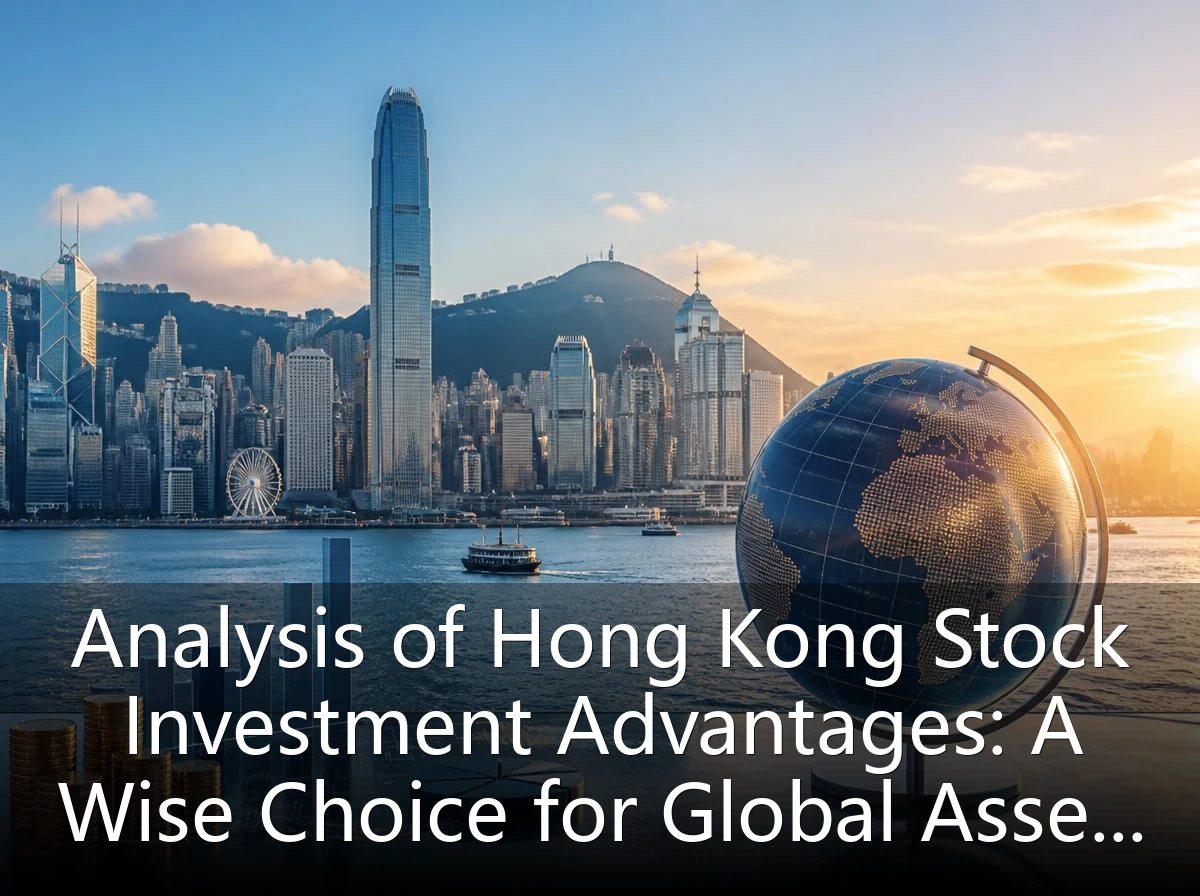
Analysis of Hong Kong Stock Investment Advantages: A Wise Choice for Global Asset Allocation in 2026
Against the backdrop of increasing global economic uncertainty, the Hong Kong stock market, with its unique investment advantages, has become a focal point for global investors. In 2026, as the interconnection between the mainland and Hong Kong capital markets deepens, and policy dividends continue to be released, the investment value of Hong Kong stocks is further highlighted. This article will provide an in-depth analysis of the investment advantages of the Hong Kong stock market from multiple dimensions, including valuation discounts, internationalization, policy support, and diversified investment opportunities, offering a comprehensive investment guide for investors.
I. Valuation Discount: The Core Attraction of the Hong Kong Stock Market
The Hong Kong stock market has long been known for its relatively low valuation levels, and this advantage is particularly evident when compared to the A-share market. As of August 2026, the price-to-earnings (PE) ratio of the Hang Seng Index is approximately 10 times, significantly lower than the average valuation level of the A-share market. This valuation discount means that investors can acquire quality assets at a lower cost, thereby achieving higher returns in long-term investments.
Furthermore, the Hong Kong stock market is home to many high-quality blue-chip stocks, such as Tencent Holdings and Alibaba, which have strong competitiveness and stable profitability on a global scale. Despite significant market volatility, the fundamentals of these companies remain solid, providing investors with a good margin of safety.
II. Degree of Internationalization: A Key Hub Connecting Global Capital
As an international financial center, Hong Kong's capital market is highly internationalized. The Hong Kong stock market attracts investors from around the world, including capital from regions such as Europe, the United States, and Southeast Asia. This degree of internationalization not only injects liquidity into the market but also enables the Hong Kong stock market to promptly reflect the dynamic changes in the global economy.
In recent years, with the continuous improvement of the interconnection mechanisms between the mainland and Hong Kong capital markets, such as the Shanghai-Hong Kong Stock Connect, Shenzhen-Hong Kong Stock Connect, and Bond Connect, mainland investors can more conveniently invest in the Hong Kong stock market. This interconnection not only expands the investor base of the Hong Kong stock market but also enhances its activity and liquidity.
III. Policy Support: Synergistic Development of Mainland and Hong Kong Capital Markets
In 2026, cooperation between the mainland and Hong Kong in the capital market sector will further deepen. For example, various initiatives launched by the CSRC, such as the launch of RMB government bond futures on the HKEX, provide investors with more investment tools and risk management methods. Additionally, reform measures by the HKEX, such as the implementation of the second phase of the minimum price fluctuation, have reduced transaction costs and improved market efficiency.
Policy support is not only reflected at the institutional level but also in the promotion of specific industries. For instance, policies strongly support emerging industries such as new energy vehicles and biomedicine, and the related sectors are active in the Hong Kong stock market, offering investors abundant investment opportunities.
IV. Diversified Investment Opportunities: Covering Multiple Industries and Sectors
The Hong Kong stock market covers multiple industries and sectors, including technology, finance, consumer goods, healthcare, and new energy. This diversification provides investors with a rich selection, allowing them to allocate based on their own risk appetite and investment objectives.
In the technology sector, the Hong Kong stock market is home to many well-known tech companies, such as Tencent and Meituan, which lead in fields like artificial intelligence and e-commerce. In the finance sector, Hong Kong's banks and insurance companies have strong competitiveness on a global scale. In the consumer sector, Hong Kong's retail and catering industries have unique regional advantages. In the healthcare and new energy sectors, innovative drug and new energy vehicle companies, supported by policies, also show good growth potential.
V. Risk Warning and Investment Strategy
Despite the many advantages of the Hong Kong stock market, investors must still be aware of market risks. The Hong Kong stock market is quite volatile and is significantly affected by factors such as the global economy and geopolitics. Furthermore, the corporate governance structure of some companies may be inadequate, and investors need to exercise caution in their selection.
For novice investors, it is recommended to start through channels like the Stock Connect programs to gradually familiarize themselves with market rules and investment processes. At the same time, paying attention to the flow of southbound funds and understanding the movements of institutional investors can help in grasping market trends. In terms of investment strategy, it is advisable to adopt a diversified investment approach to reduce risks associated with a single industry or company.
VI. Conclusion
In 2026,凭借其 valuation discounts, internationalization, policy support, and diversified investment opportunities, the Hong Kong stock market has become an important choice for global asset allocation. For investors seeking overseas investment opportunities, the Hong Kong stock market offers a wealth of choices and the potential for high returns. However, investors must fully understand market risks, formulate a sound investment strategy, and achieve long-term, stable returns.